
INTERVIEW: GRETA BELLAMACINA
APRIL 13, 2026
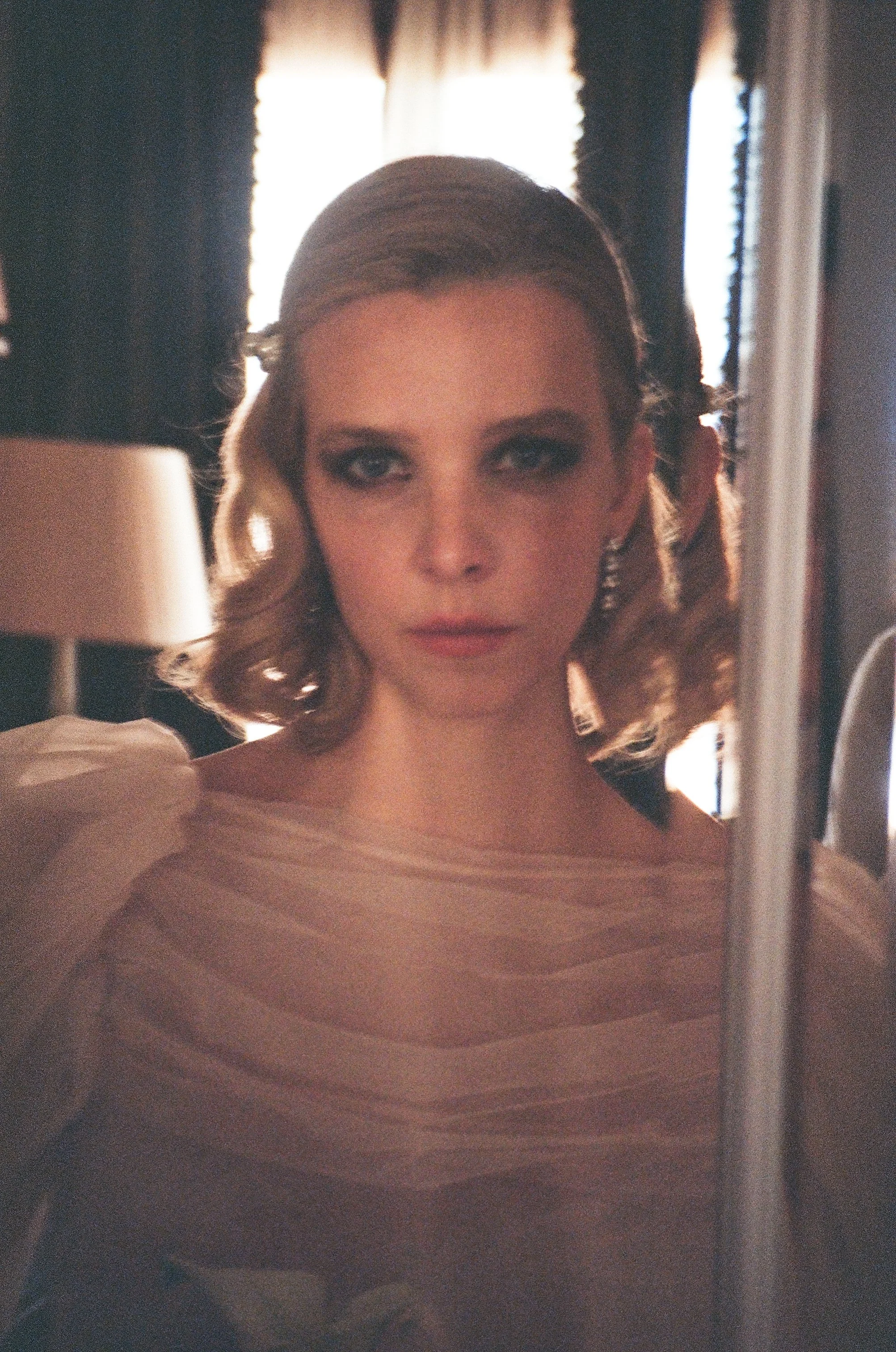
Greta Bellamacina's Things and Other Things, directed by Riccardo Vannuccini and filmed across abandoned sites in Tuscany, feels like a world gently loosened from the logic of time. Bellamacina - a British actress, poet, and filmmaker trained at RADA, whose work moves between language, image, and performance with equal instinct - reunites here with Vannuccini, the Italian theatre and movement director behind ArteStudio, whose practice spans "therapy theatre" in prisons, hospitals, and refugee contexts. Following their earlier collaboration on Commedia (2022), the two continue to build a shared cinematic language grounded in symbolic structure, where poetry, gesture, and movement operate not as separate disciplines, but as overlapping ways of thinking and feeling through the world.
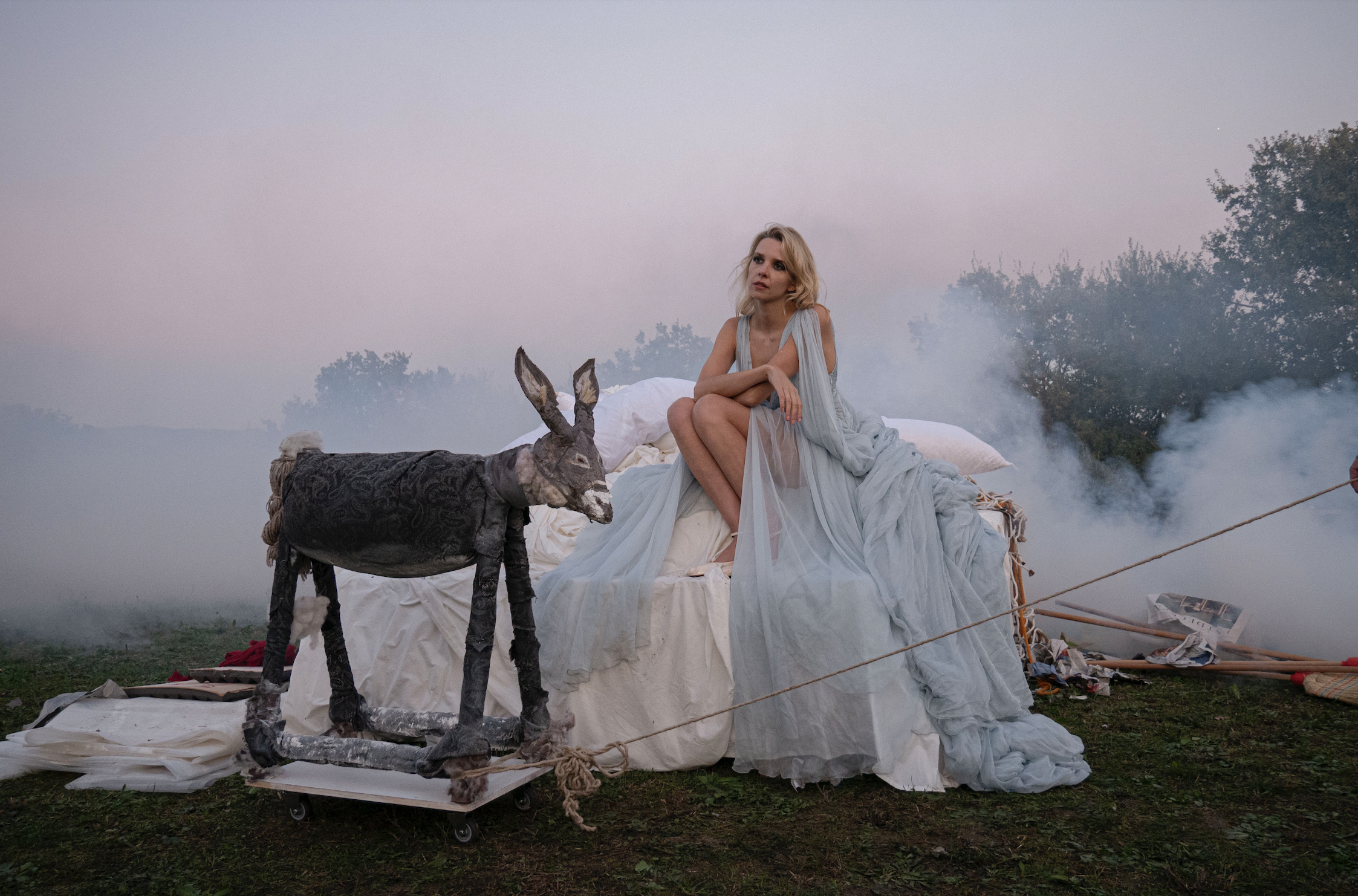
Set within emptied schools, derelict interiors, and wintered Tuscan landscapes that feel both ancient and suspended in a quiet post-industrial stillness, the film resists plot in favor of presence. Characters move through one another in multilingual fragments - English, Italian, French, German, Arabic - where meaning is never fully translated but instead carried across bodies, glances, and rhythm. In this field of subtle dislocation, Pierpaolo Piccioli’s Valentino couture - most strikingly the custom blue gown with a sweeping 6-metre train, one of his final works for the house - appears as something almost elemental, moving through ruin like a luminous counterpoint to the surrounding environment. Its form holds both precision and softness at once, introducing a quiet sense of elevation within the decay. In a moment that echoes a broader reality that can feel increasingly fractured, even apocalyptic in its dislocation, the film returns again and again to the necessity of connection. Here, Bellamacina speaks to us about the making of the film, and shares a new poem of her own, offering a glimpse into the emotional and imaginative terrain of her own work and interior world.
NO BEFORE, NO AFTER
Greta Bellamacina on language, time, and her latest film
By J.L. Sirisuk
"Beyond language we all live in our bodies, in our heads, in our hearts. In this film the multitude of language is not a hindrance, it is a coming together. Something I have never seen happen before in cinema."
- Greta Bellamacina
I want to rewind a bit. Who was the first poet, writer, or artist whose work captivated you so completely that you felt addicted to their words, and how does that influence your acting and writing today?
I spent a lot of summers performing at my local youth theatres. I loved that a singular place could be a portal to so many people and places, and that it gave permission to move forward and back in time. I guess my first influences were quite traditional playwrights like Chekhov and Shakespeare. Then when I was 16, I auditioned for the RADA Youth Theatre and got in - it was the first time in my life that I felt like I had found a community of artists who were on a similar journey as me. I performed the bride in The Blood Wedding by poet and playwright Federico Garcia Lorca. I discovered that his plays were more than just stories and characters, they offered enough space inside the writing to feel like real life. Enough strangeness and heart ache. They did not feel like entertainment. They felt like truth.
Your career spans poetry, theatre, film, and fashion. Was there a single moment, work, or mentor that made you realize this interdisciplinary path was inevitable, and how has that shaped your creative choices since?
There have been several, but one who stands out is the late poet Michael Horovitz. We became friends over a decade ago when we started performing poetry at the same events. I sat in the audience many nights and watched him perform - I was always amazed by his sense of urgency and ability to stay in the present. Even into his last years, in his 80s, he came and performed, always with a tote bag full of poetry books to sell and a notebook of email addresses that he collected at the end of each night so that he could keep building his community. He never stopped the fight, poetry was everything. It was a good lesson for me to see that the act of doing was far greater than anything else. To do and be present is a gift. Also, my husband the artist Robert Montgomery continually surprises me with his perspective on the world.
Your work often explores displacement, fragility, and human connection. What topics or ideas are you compelled to return to across different mediums, and why do they matter to you?
At the moment I am particularly interested in the concept of time. How life is non-linear and the way we experience the world is actually more dreamlike and interrupted than we initially realize. I have always been amazed by the sense of detachment an image has and I don't quite know why some images are more powerful than others. But they have a power to interrupt the present. It's like the image wants to find their way out of the past and exist in the present. Memories are like hauntings in a way. I find acting is a good way to explore this, often the act of existing in the present is the most interesting thing on screen, the reality of a character in between the lines.
How did you and Riccardo [Vannuccini] initially connect? What brought you together?
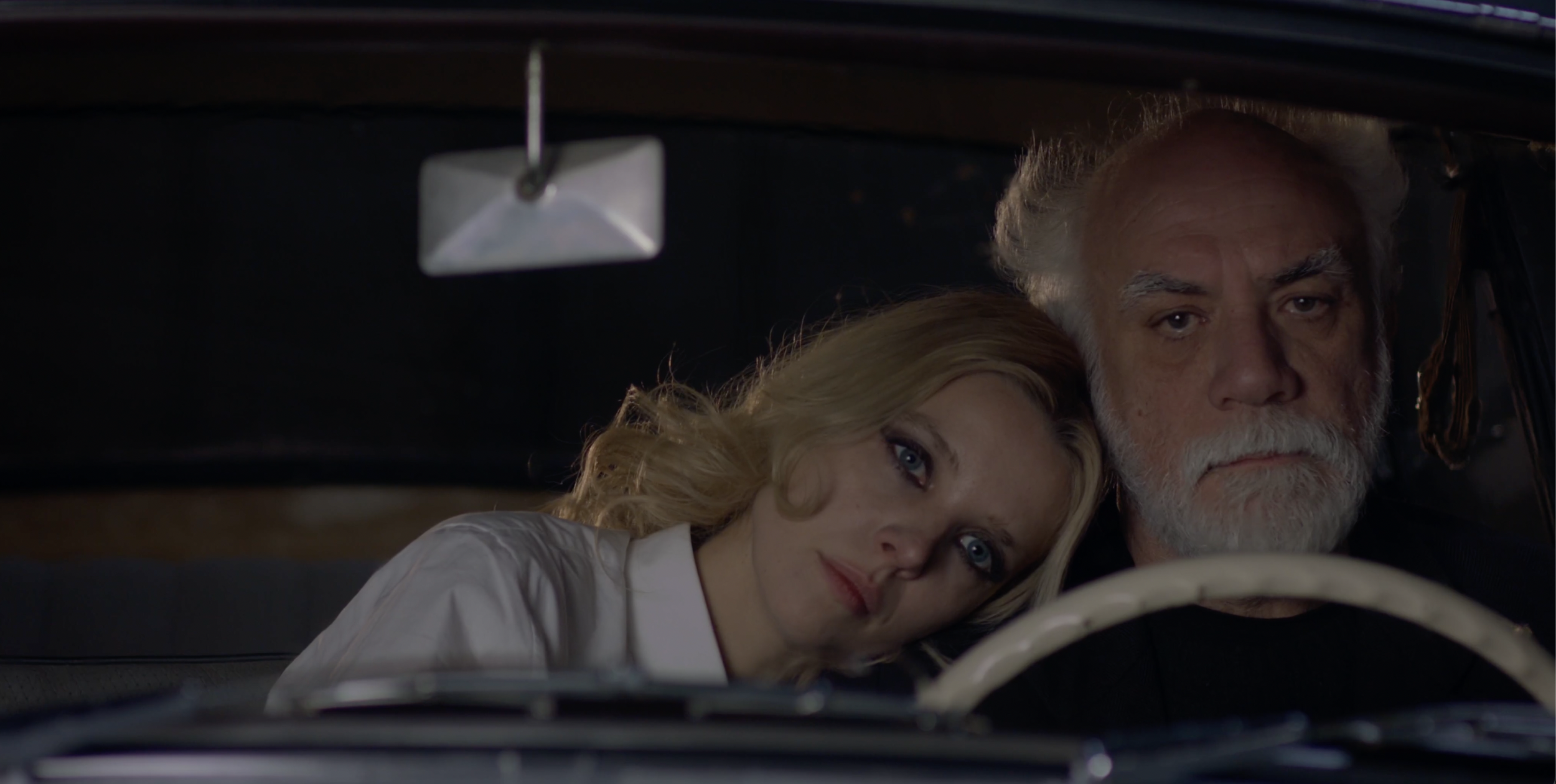
I performed in one of Riccardo's "Peace" plays with his theatre company in Rome at the Ara Pacis (the Temple of Peace). The performance started at midnight and lasted an hour. A dream of peace, performed while everyone was dreaming. His theatre company is special, nothing like I have worked with before, they tell stories of love and war. The company is made up of his core group of actors with a moving chorus of additional actors who come from the "therapy theatre" projects Riccardo does. ArteStudio has a twenty year history of therapy theatre - working in prisons, mental hospitals and refugee camps across Italy with incarcerated and displaced people, and the people they work with in those situations often join productions and become part of the company. This core idea of reaching out to people who are living in difficult situations, and of theatre as healing is at the soul of what ArteStudio do.
We rehearsed the play in a dance studio and a lot of it was figuring out the timings. His stage sets are simple, often a row of chairs that gets moved around, a lost teddy bear, bits of old rubbish, old shoes, and clothes. But each tell a story, a shipwreck, and there is always something happening. A character picking up the shoes, another person tearing up a piece of paper, someone else muttering in a different language. There is a disarray of madness, but also rhythmic order to them. In moments everyone comes together, but the coming together is more of a frantic cry than a uniform of harmony. I wrote a poem for the play called Meltdown inspired by the recent war that had just broken out in Ukraine. I performed it in English and Riccardo spoke it in Italian. This play and the previous film Commedia that we also made in Rome, gave me the security to let go.
Riccardo writes roles specifically for you and brings his physical theatre language into cinema. What's one unexpected or challenging instruction he gave that completely changed how you approached a scene?
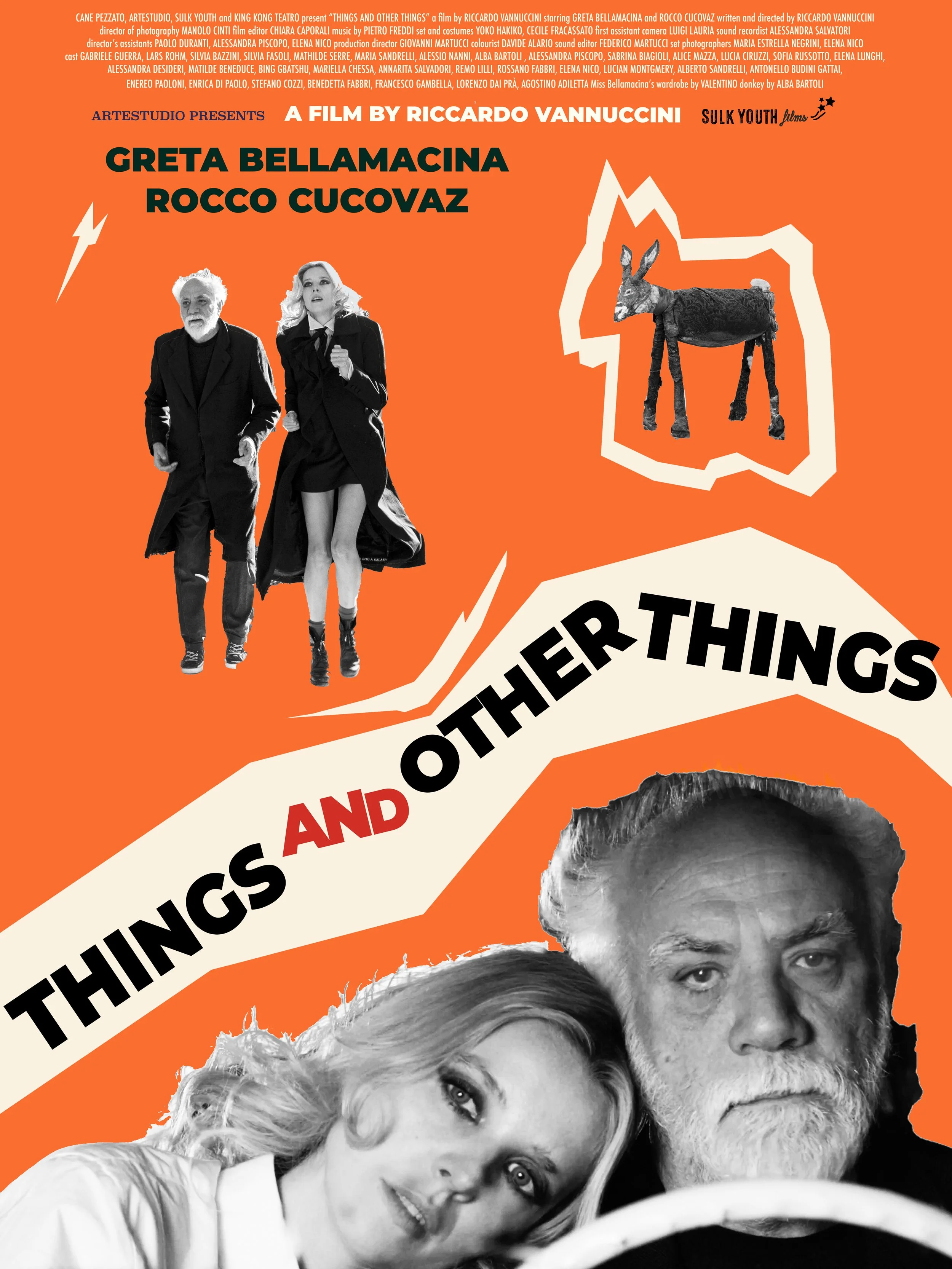
Things and Other Things is our second film together. The first film Commedia (2022) we filmed in Rome, and this second film we filmed in Tuscany. The two films are some of the work I'm most proud of. Before we started Commedia I was nervous. Riccardo had written to tell me the story, but then when I read the script it was more like a series of dreams - both surreal and familiar at the same time. Sometimes following the story and sometimes escaping the story. I couldn't imagine exactly how we would shoot it, but then when I discovered Riccardo's theatre work I realized the process would be more like his theatre. Riccardo is working with movement theatre in a similar vein to Pina Bausch but with voice and text. Dance becomes its own language in the films. With the smallest of movement, the body seems to be able to bring to life the unsaid. It can be as simple as walking in union, or both characters waving in concert. Just at the moment you think they might have given up, they see life. I like the idea that dance can replace a binary world, sometimes words are too finite. Movement can be a way to let go and blur new ideas together, and to express relationships beyond language.
In Things and Other Things, my character Irene and Riccardo's character Rocco find themselves in a post-industrial world, an abandoned world, where almost nothing happens. They are left with their imagination and dreams. Left to play like children. Neither of them speak the same language. It's a Waiting for Godot-esque story of waiting for something to happen, and along the way they meet displaced people and objects that suggest everyone is now, for some reason we don't know, displaced from their homes. They find themselves walking through camps with other characters who don't speak the same language. In a way, language isn't enough to tell the story. The movement is a way of finding a new language. So symbolic movement is used, and it illustrates non-linguistic relationships. Riccardo has said that the film doesn't have the logical narrative of a novel, but instead the "symbolic narrative" of a poem.
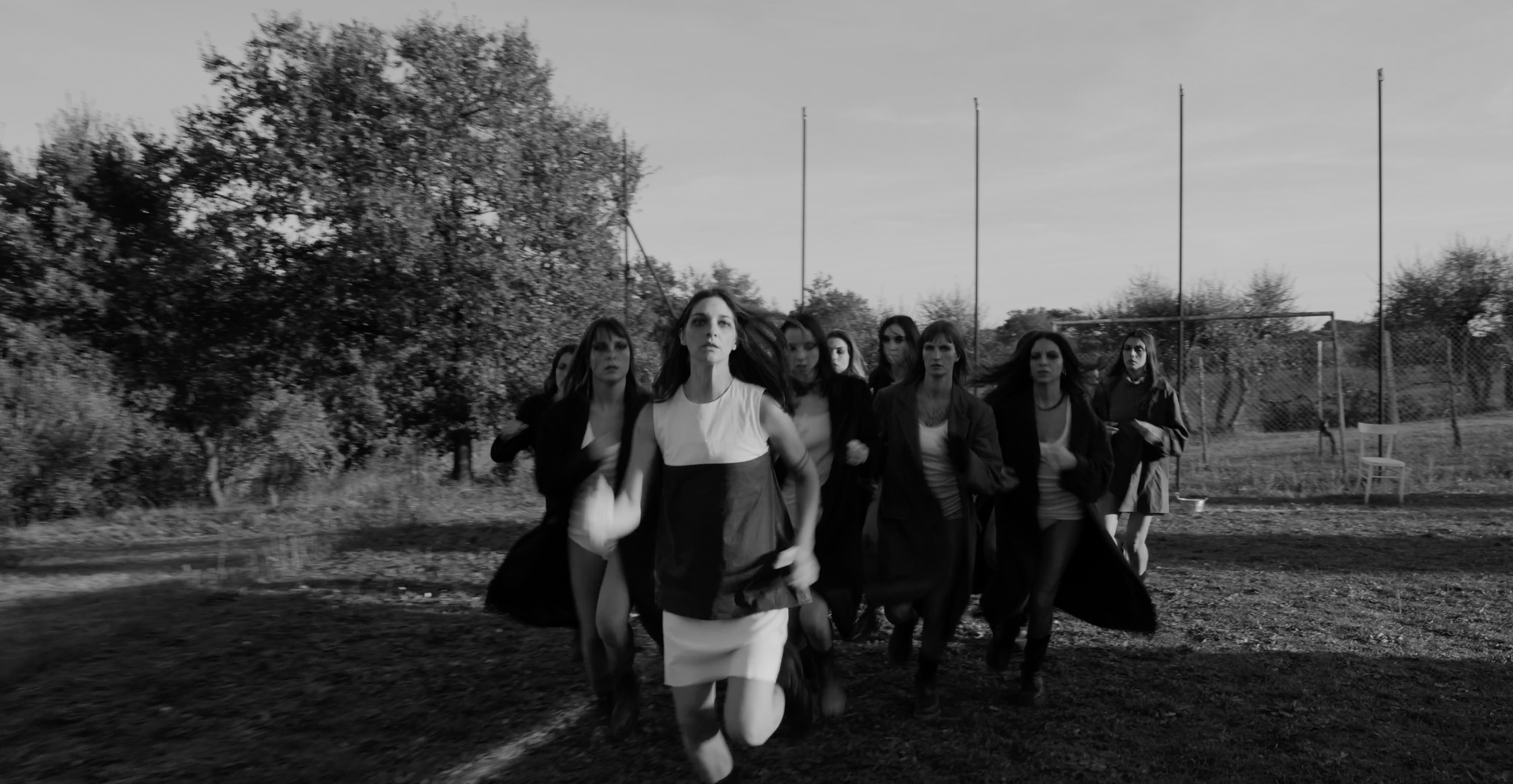
Your character Irene and Rocco don't speak the same language, and the cast communicates in Italian, English, French, German, and Arabic. Did this multilingual environment create a new kind of intimacy or tension on set, and how did it shape your performance?
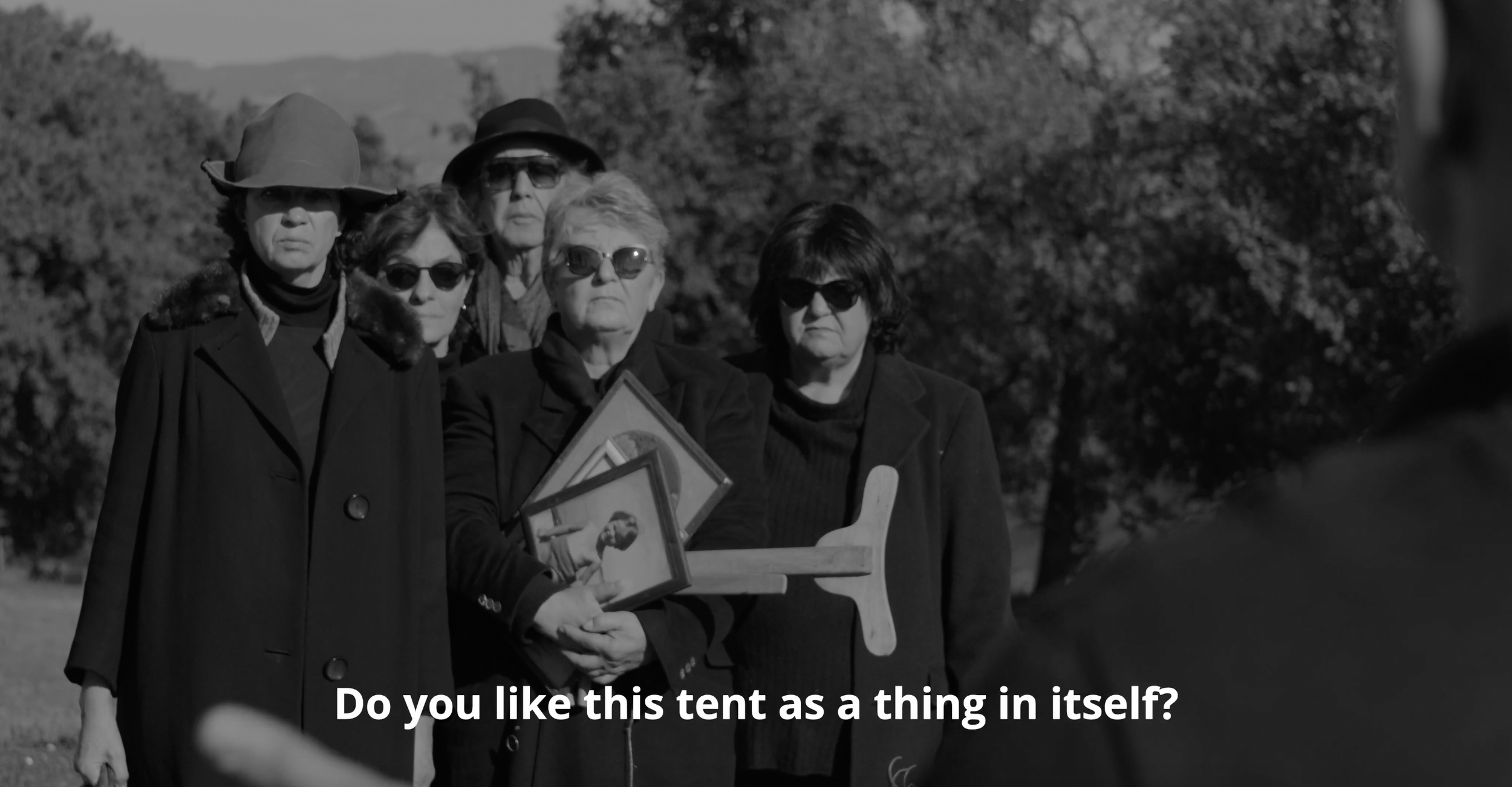
I really believe in European culture, that's why I love the projects I've been making in Italy, like my films with Riccardo. The two films we've made together are distinctly European in that all the actors speak in their own languages - Italian, English, French, German and Arabic. So often an actor does not understand what the next actor is saying with words, and Riccardo then uses movement as a form of communication between the actors and with the audience. He is bringing movement theatre into cinema and blending that with text and layers of symbolic meaning. I think Riccardo is a genius. I don't know any other director who is working quite like this. I think his films feel somehow much closer to real life, to the comedic truth of life. The story is able to take on a deeper level of lived experience. Perhaps we are all displaced? Perhaps we are all much closer to one another than we think? It is a powerful message because, beyond language we all live in our bodies, in our heads, in our hearts. In this film the multitude of language is not a hindrance, it is a coming together. Something I have never seen happen before in cinema.
Things and Other Things is described as "structured like a poem rather than a novel." As an actor and poet, do you approach a film like this differently; do you feel like you're performing a poem with your body, or inhabiting a character in a more traditional sense?
I think the experience for me as an actor is all in the silence. Nothing is really spoken outwardly in the scenes of Riccardo's films - and if it is, it is likely to be a song, a poem or a piece of literature. The story instead is told in between the lines of the script. There is the world happening, but then there is the world happening inside. The world happening inside is less of a novel and more of a haunting of memories and feelings.
The film's abandoned, post-industrial environments feel almost like characters themselves. Do you respond emotionally to environment in your work, or is it primarily a tool for storytelling?
Tuscany in the winter is incredibly melancholic, as if the light is always yellow. There is a nostalgic glow to the place in the dead of winter. There is something very ancient about the landscape, there is something very still in time and place. You can definitely feel that more in the winter. Riccardo and I discussed this together, we discussed the way the landscape seemed unchanged and untouched by the modern world. How the winter is a reminder of that, with just the farm animals and the empty fields. Especially when all the crops go to sleep, it seemed to echo a Terrence Malick landscape, so one film reference was Badlands and then another was our own first film Commedia, which is set in the landscape around Rome and Ostia, again in winter. Riccardo said he wanted to make a film about doing nothing, the opposite to this fast world of today. To do nothing in a place that is asleep, seemed like an important idea. We filmed one of the scenes in an old abandoned house on a pig slaughter farm. Between the shots, there was a haunting sound of the pigs crying in the distance. Perhaps a distant reminder of this world we have come to live in. The animals never lie. The garden is a good reminder that life has its own eternity. I love wildflowers for this reason, you throw them into the sleeping soil and then the seed appears, the flower with its own destiny and timeline. I love forgetting and remembering the flowers, the same way every year. This year in the greenhouse, I've brought all the plants inside of it to shelter from the frost, but the Geraniums continue to flower on, regardless of the cold, all through winter. I love Geraniums the most, they inspired this new poem:
the iced cold reached my dreams
If you keep trying this hard it won’t happen
The animals can smell your desperation
best thing to do is to stay cold
twilight will find you there
and light a match.
I drank their words wiping back my crocodile tears
the vines of my blood raised and set
I looked out to the garden, it was nowhere to be seen
unavailable life surrendering an invisible ghetto.
Death is only an idea in which the living created
the garden lives invisibly
it keeps working, under, away from the eye.
living and dying are the same thing in the garden
eyes closed or open.
Death is only an idea to those who believe in material the world
Death is an impossible Geranium.
How did Pierpaolo Piccioli become involved in the film? Pierpaolo Piccioli's final couture for Valentino, the six-metre blue train, became Irene's signature. How did inhabiting that dress affect the way you moved, thought, or existed in character? Do you see fashion as another language of storytelling?
Pierpaolo's clothes are made for cinema, because they transcend time, they make you believe that beauty can exist all around, even in a broken time. We first collaborated in 2019, when he wove my poetry into his AW collection for Valentino. The dress he made for my character in the film had a certain dream-like quality to it. We filmed Things and Other Things in entirely abandoned locations in Tuscany, an old abandoned theme park, an old hospital, an old school. In a way, the costumes create visual contrast to these settings, a dream-like quality. Because the atmosphere is so melancholic, the dress takes on a different meaning. It allows you to look at objects and costumes outside their context, like children often do when they play dress-up. For instance there is a scene where I find the beautiful blue dress, I don't know what it is. The next time you see me I am wearing it on a bed in a field made from broken rubbish. Rocco is billowing the six-metre train and at first glance it looks to be the sea, then on close look it could be the sails of a boat, then you realize it is a beautiful dress, which is out of place. I think there is something very beautiful about having costumes that give real visual contrast to the world.
In Things and Other Things, Irene often exists without a traditional emotional arc or plot. Did performing "just existing" in language, gesture, or movement, feel liberating, or did it force you into new vulnerabilities?
Dreaming is a big part of this film. My character lives in her imagination. The final script is very much in Riccardo's head. When we are filming, he practically doesn't go to sleep after we leave set. He is perpetually sketching ideas into a notebook, right up until the moment the camera starts to roll. A lot of the prep for me as an actor is before we start. I learn all the lines, ask a lot of questions and read all the referenced literature. Then on the day, it's about being as open and free to the scene idea as I possibly can, allowing the moment to enter into the space. Forgetting everything and letting the unexpected happen. For instance, a lot of the literary references in Things and Other Things are a way to show the two characters playing, like children. Left with no belongings, just the works of literature that seem to haunt their souls and live in their skin. That's all they have in the end. For instance, there is a scene where Irene recites the iconic Romeo and Juliette monologue "Will thou be gone, it is not yet near day" to Rocco, but instead of being in a bed, I am up a ladder saying the words through the arms and body of a teddy bear, like a puppet show. And Rocco who is also up another ladder, is listening to the words, holding out a bear, pretending it is Romeo. It was very fun to learn lines from great works and retell them in a very unserious way. I have come to really like this way of working. On a strange meta level it helps with the performance, because this character is reacting in real time, I know her private story, but her reality is wanderings through an apocalyptic world. Staying in the moment keeps a sense of realism and unexpectedness to the rest of the film.
Looking back at this project, what's the one creative risk you took that might have changed you as an artist?
The physicality of love is the one thing I will take away and not forget.
WEB DESIGN & DIGITAL PUBLISHING | Heaven Ash
UP NEXT